


You don't lose jobs because your work is bad. You lose them in the three hours between the WhatsApp landing and you climbing down off the roof to answer it.
For South African tradespeople, quote conversion is a speed-and-follow-up game, not a marketing one. The homeowner messages three plumbers at once and books whoever replies first with something useful. If you're elbow-deep in a geyser when that message comes in, you're already losing — and the quote you eventually send, if you send one, dies of silence rather than price.
This post is the honest version — no magic, no fake stats. "Doubling your conversion" isn't a study result; it's what the arithmetic gives you when you fix three specific leaks: the enquiry you never saw, the one you answered too late, and the quote you never chased. Fix all three and going from one-in-five quotes won to two-in-five is realistic. We've seen it in practice.
Leak 1: the enquiry you never saw
The first leak is the enquiry that lands while you're on the tools and never gets seen until it's too late. Most SA trades run the whole business off one personal WhatsApp number, so when you're under a sink or driving between jobs, the business is effectively offline — and the customer books someone else.
South Africa is genuinely WhatsApp-first — well over 20 million users, and for most customers it's the default, not the backup. We unpack why in why South Africans buy on WhatsApp. The point for trades: your customers already send photos, voice notes and location pins on WhatsApp. The channel is fine. The gap is that nobody's holding it when you can't.
Why loadshedding makes this worse
- Demand arrives in spikes: gate motors, inverters, tripped DB boards and burst geysers all cluster around outages — usually after hours, all at once.
- Urgency-buyers don't wait: the customer enquiring during an outage is buying on speed. First competent reply wins.
- Your office goes dark too: a cloud-hosted AI agent keeps answering even when your own Wi-Fi or power is down at stage 4.
An always-on AI agent on your business number replies within seconds, 24/7. It acknowledges the lead, asks the questions you'd ask, and warm-holds it: "Thanks — send me a photo of the geyser and drop a pin of your area, and Tjaart will confirm a time by 17:00." The job isn't won by the bot. It's kept alive until you can win it.
Leak 2: the enquiry you answered too late
The second leak is the lead you do see, but answer too late to matter. Speed to first response is the single biggest lever you have: for an emergency callout with a 30-minute shelf life, being the first competent reply is most of the sale. In practice, the trade that answers in seconds quotes the jobs the slow one never reaches.
The maths is brutal once you write it down. Miss three enquiries a week, half of them real jobs averaging R3,500–R15,000 depending on trade, and that's roughly R10,000–R60,000 of quoted work a month that never even got a reply. Do your own version of that sum — the number is usually bigger than expected. Treat it as illustrative, then plug in your own ticket sizes.

What the AI actually does
- Instant first reply, 24/7: you're in the first-responder slot while a competitor's phone rings out.
- Structured triage: it collects location pin, problem, photos or video, access and urgency — so the quote goes out faster and the site visit arrives pre-qualified.
- Emergency routing: words like burst, flooding, no power, sparking escalate straight to a priority alert or call instead of a polite chat flow.
- Photos-and-pin quoting: many small jobs can be ballparked from two photos and a pin — no wasted call-out trip.
Leak 3: the quote you never chased
The third leak is the quote you send once and never follow up. Ask around any trade and you'll hear the same thing — quotes die in silence, not in "no". A quote with zero follow-up is a coin toss; a quote with a polite day-2 and day-5 nudge is a conversation, and almost no competitor bothers to have it.
The AI sends those nudges automatically, in your voice: "Just checking you received the quote — any questions on the geyser option? Happy to hold the price until Friday." Because the chase is consistent rather than dependent on you remembering at 21:00 after a 10-hour day, it recovers jobs that were lost purely to silence.
A typical pattern we see (composite example, not a named client): A two-man electrical outfit on the Garden Route used to return calls after 17:00 — by which time half had gone cold. They put an AI agent on their WhatsApp line. Now a 21:30 enquiry gets answered in seconds, the customer sends a photo of the DB board, the site visit is booked into the diary, and a polite nudge goes out on day 3 if the quote goes quiet. Their accepted-quote rate roughly doubled over a quarter — same marketing spend, double the jobs. Illustrative, not a guaranteed result.
Why this doubles conversion — the honest arithmetic
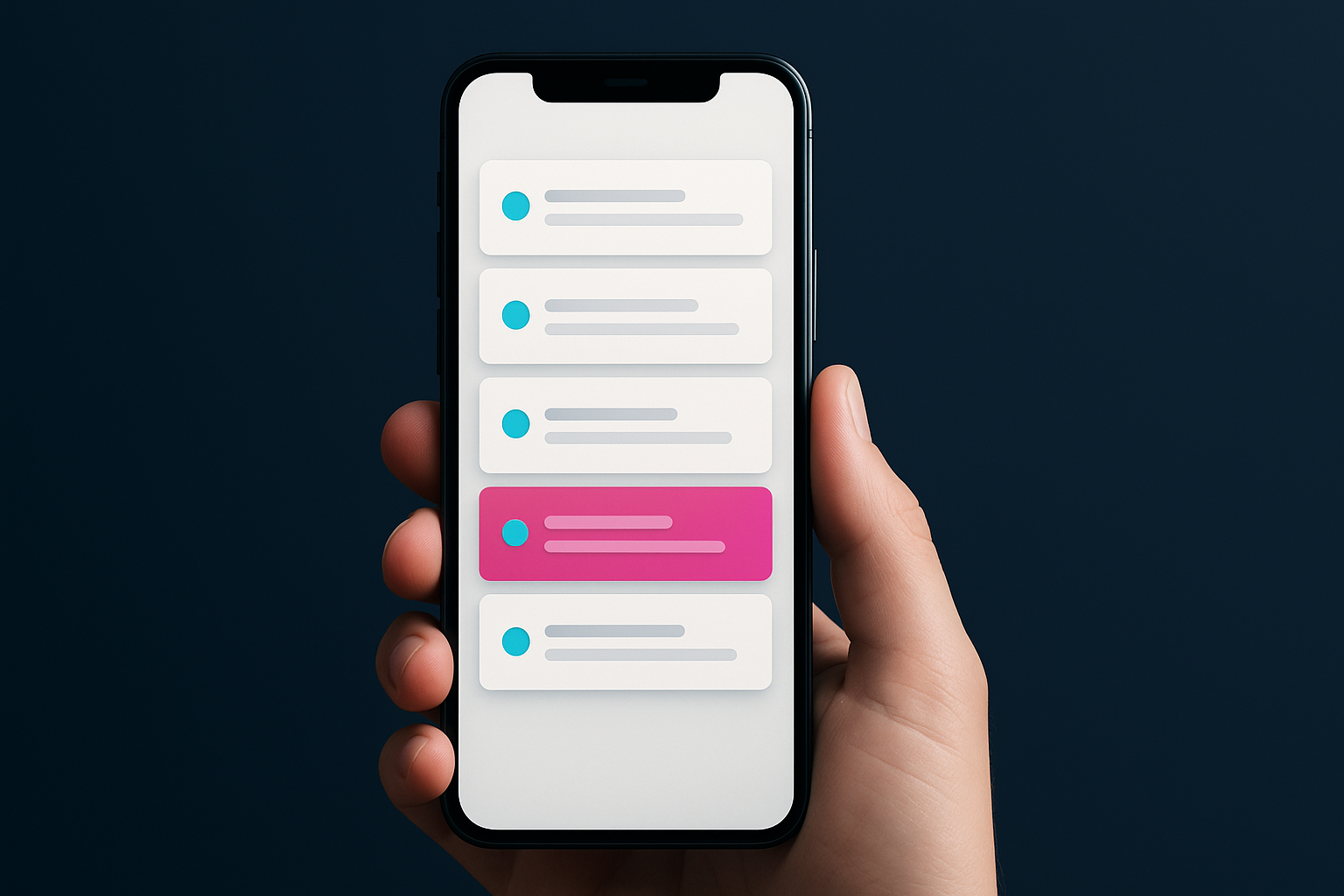
It doubles because three small lifts multiply, not because the AI is clever. Conversion = leads answered × answered fast enough to matter × quotes followed up. Lift each leg modestly — answer 95% instead of 60%, quote 75% of qualified leads instead of 50%, close 40% of quotes with follow-up instead of 30% — and the end-to-end rate more than doubles. Funnel maths, not magic.
Your baseline decides your result. If you already reply in minutes around the clock and chase every quote twice, you won't double — and we'll tell you so. But most one-person operations leak heavily on at least two of the three legs, which is exactly why the lift is real. One recovered geyser job a month (R6,000–R16,000) pays for any sane WhatsApp automation several times over.
App or Platform — and what about POPIA?
Short version: the free WhatsApp Business app handles labels and an away message, but it can't triage, book, follow up or run while you're offline — that needs the WhatsApp Business Platform. And POPIA actually favours the Platform build, because it gives you consent records and access control your personal phone never had.
We compare the two in the WhatsApp Business app vs Platform guide — start with the free app if you get a handful of enquiries a week, and upgrade when you need after-hours cover. On POPIA: a personal phone full of customers' names, addresses and house photos is the risky setup — lose the handset and that's a breach, with no consent records. A proper Platform build with consent capture, access control and retention rules is the more compliant option, not the scary one. Follow-ups about a quote a customer requested are fine; cold blasts to scraped lists are not.
Common questions
A few things every trade asks before putting an AI agent on their WhatsApp line — about whether customers mind a bot, whether it can quote, how it handles a 2am emergency, and what it costs. Short, honest answers below, with no over-promising on any of them.
Will customers be put off by a bot?
They're far more annoyed by silence for six hours than by an instant, useful reply. The AI identifies itself as an assistant, asks the questions you'd ask anyway, and hands over to you for the quote and the site visit. You read every chat exactly as if you'd answered it yourself.
Can the AI give prices?
Only the ones you approve. It can share your pre-set ballpark ranges or no prices at all — just collect the info and book the visit. The binding quote always comes from you. It never invents a number, and anything outside its script goes straight to you.
What happens to a burst geyser at 2am?
Urgency keywords like "burst", "flooding" or "no power" trigger an immediate priority alert or call instead of a polite chat flow, so genuine emergencies reach you fast. Routine enquiries get triaged and booked for the morning, so nothing high-value waits in an unread inbox.
What does it cost and how fast does it pay back?
Fixed pricing, no hourly billing, with Meta's per-message fees at fractions of a rand. At trade ticket sizes — one geyser replacement, one flooring job, one solar deal — one or two recovered jobs a month typically covers it. We show you the per-month figure upfront. Figures illustrative, not promised.
Where to start
Start by auditing your own funnel before buying anything. Put a click-to-chat WhatsApp link everywhere your number appears, write down the five qualification questions you ask per job type, and check your last 10 quotes — how many did you actually follow up? That self-audit usually makes the case on its own.
When you're ready to systemise it, that's what we build: an AI agent on your WhatsApp that answers in seconds, triages with photos and a pin, books site visits and chases every open quote — fixed price, 1–4 weeks, weekly progress updates, built in George.